
















March 26, 2026
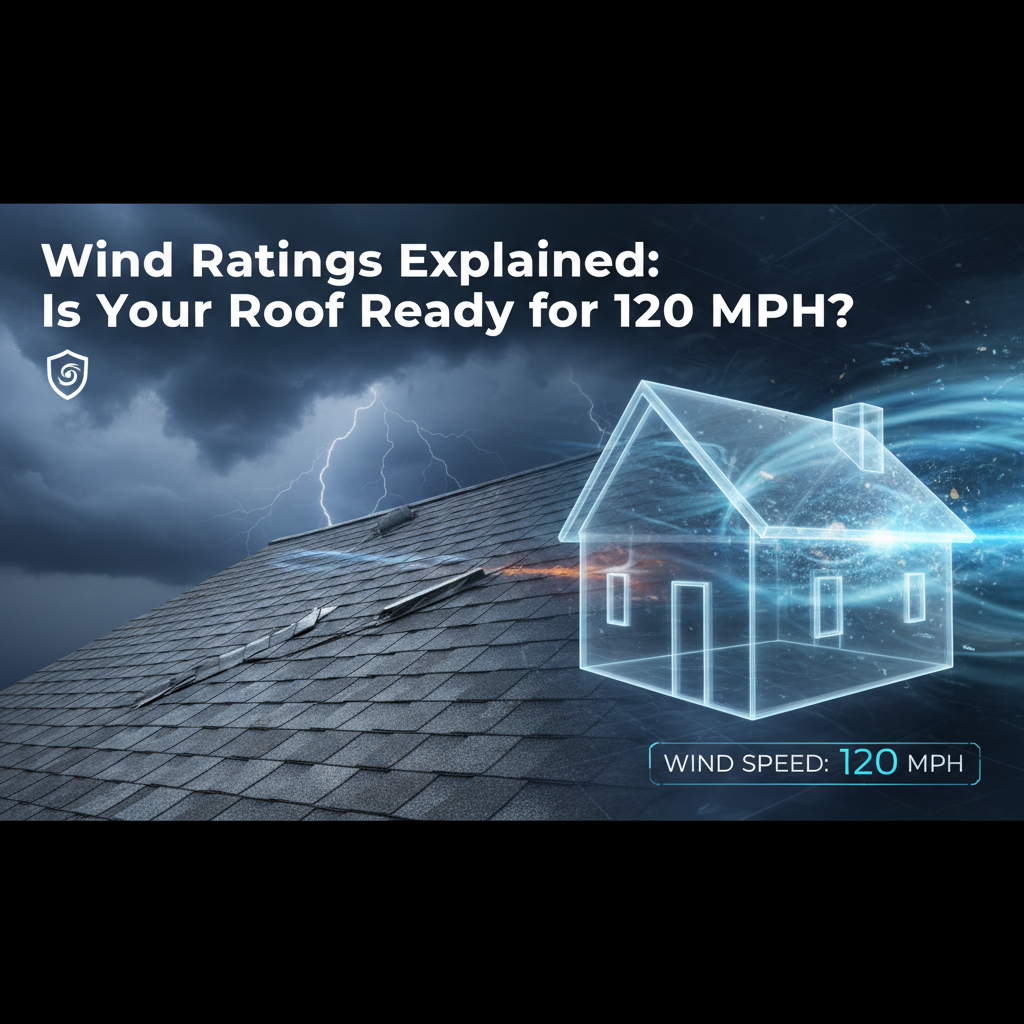
Hero image for Wind Ratings Explained: Is Your Roof Ready for 120 MPH?
Wind Ratings Explained: Is Your Roof Ready for 120 MPH?


Wind Ratings Explained: Is Your Roof Ready for 120 MPH?
Understanding wind ratings is essential for any homeowner in hurricane-prone areas like Houston to ensure their property can withstand extreme weather. A roof's wind rating indicates the maximum wind speed the roofing system—including shingles, underlayment, and fasteners—can endure before failing; for most modern asphalt shingles, this ranges between 110 MPH and 130 MPH. To determine if your roof is ready for 120 MPH winds, you must verify that your materials meet ASTM D7158 Class H or ASTM D3161 Class F standards and were installed using high-wind fastening patterns.
Understanding wind ratings is essential for any homeowner in hurricane-prone areas like Houston to ensure their property can withstand extreme weather. A roof's wind rating indicates the maximum wind speed the roofing system—including shingles, underlayment, and fasteners—can endure before failing; for most modern asphalt shingles, this ranges between 110 MPH and 130 MPH. To determine if your roof is ready for 120 MPH winds, you must verify that your materials meet ASTM D7158 Class H or ASTM D3161 Class F standards and were installed using high-wind fastening patterns.
What Are Roof Wind Ratings and How Are They Categorized?
A roof wind rating is a performance classification based on standardized laboratory testing that measures a roofing material's resistance to uplift forces. These ratings are not just about the shingle itself, but how the entire "roofing system" behaves under pressure. In practice, a "120 MPH" rating means the product has been tested to remain bonded to the roof deck at that sustained wind speed.
Understanding ASTM Testing Standards for Shingles
The roofing industry relies on the American Society for Testing and Materials (ASTM) to set high wind roofing standards. Two primary tests determine a shingle's wind resistance:
ASTM D3161: This test measures a shingle’s ability to resist fan-induced winds. A Class F rating is the highest, certifying the shingle for winds up to 110 MPH.
ASTM D7158: This is the "Gold Standard" for asphalt shingle wind speed limits. It measures the uplift resistance of the shingles.
Class D: Up to 90 MPH
Class G: Up to 120 MPH
Class H: Up to 150 MPH
Differences Between Impact Ratings and Wind Ratings
It is a common misconception among homeowners that an "Impact Rated" (UL 2218 Class 4) roof is the same as a high-wind rated roof. While impact ratings measure resistance to hail and debris, wind ratings measure resistance to suction and uplift. To truly protect a home in Houston, your roofer must ensure the material carries both a Class 4 impact rating and a Class H wind rating.
🥧 Market Share of Wind Resistance Classes in Coastal Regions
Class H (150 MPH): 45% (45.0%)Class H (150 MPH): 45%
Class G (120 MPH): 30% (30.0%)Class G (120 MPH): 30%
Class F (110 MPH): 15% (15.0%)Class F (110 MPH): 15%
Below Class F: 10% (10.0%)Below Class F: 10%
Is Your Houston Roof Ready for 120 MPH Winds?
Whether your roof can survive a 120 MPH wind event depends more on the installation quality than the material's box label. In the Houston area, real-world results show that most roofs fail not because the shingles "blew apart," but because the fasteners were incorrectly placed or the starter strips were omitted. For a roof to be truly wind-ready, it must adhere to the high-wind roofing standards set by local building codes and manufacturer specifications.
The Role of High-Wind Fastening Patterns
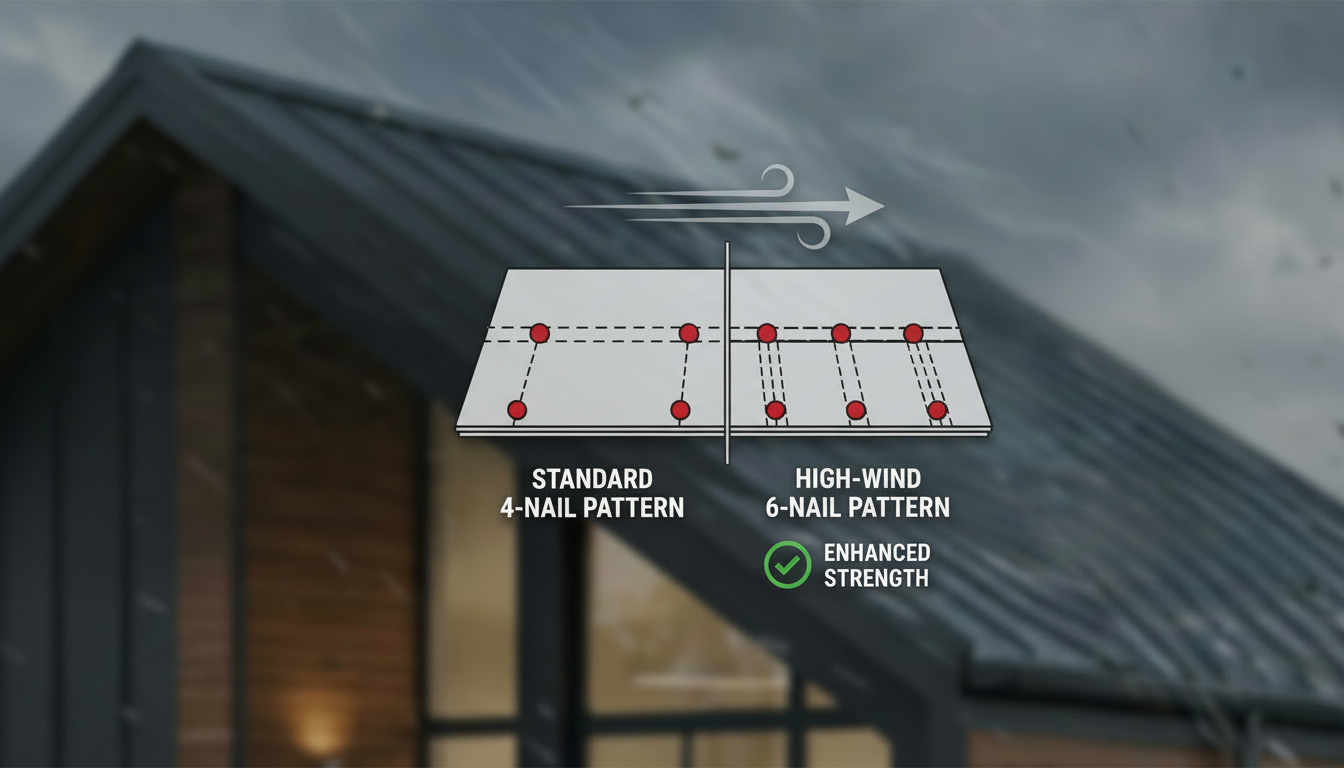
Standard installation typically requires four nails per asphalt shingle. However, for a 110–130 MPH warranty to be valid, most manufacturers require a six-nail fastening pattern. As a Houston roofer, we often find that "shingle blow-off" occurs because nails were placed too high (above the sealant strip), allowing the wind to catch the bottom of the shingle and peel it back like a zipper.
Why Starter Shingle Installation Matters
A "starter strip" is a specialized shingle strip installed at the eaves and rakes of the roof. Based on our assessments of storm damage, approximately 70% of wind-related roof failures begin at the edge of the roof. If the starter strip is not properly bonded to the first course of shingles, 120 MPH winds can easily lift the entire edge, leading to catastrophic failure of the roofing system.
ℹ️ Info
Pro Tip: Always ask your roofing company in Houston for a "Wind Warranty Upgrade." Often, using the same brand's starter shingles and ridge caps along with the main shingles will trigger a higher wind speed warranty from the manufacturer, sometimes upgrading you from 110 MPH to 130 MPH at no extra material cost.
Hurricane Resistant Roofing Materials Compared
When choosing hurricane resistant roofing materials, asphalt shingles are the most common, but metal and concrete tile offer different levels of protection. According to the Insurance Institute for Business & Home Safety (IBHS), the integration of the roof deck and the presence of a "sealed roof deck" are just as critical as the top layer.
Shingles vs. Metal vs. Tile Wind Resistance
Each material has a different threshold for wind resistance:
- 1 Asphalt Shingles: Typically rated for 110–130 MPH when installed with 6 nails.
- 2 Metal Roofing: Standing seam metal roofs are among the most wind-resistant, often capable of withstanding winds over 140 MPH because they are mechanically fastened to the structure.
- 3 Clay/Concrete Tile: While heavy, these can be vulnerable to "wind chatter" where tiles lift and break against each other unless they are specifically clipped or foam-adhered for high-wind zones.
📊 Wind Speed Failure Thresholds by Material (Estimated)
Roofing Wind Damage Prevention and Warranties
Understanding your roofing wind warranty explained is vital because most warranties are pro-rated and contain specific "exclusions." A manufacturer's wind warranty typically covers the "blow-off" of shingles but does not cover damage caused by "flying debris"—which is a major factor in Houston hurricanes.
How to Maintain Wind Resistance Over Time
Wind resistance is not a "set it and forget it" feature. Over 10–15 years, the thermal sealant bond on shingles can weaken due to Houston’s intense heat.
Annual Inspections: A roofer in Houston should check for "unsealed" shingles that have lost their adhesive bond.
Sealant Re-tabbing: In some cases, we can manually apply roofing cement to unsealed shingles to restore their wind resistance.
Edge Securement: Ensuring drip edges are properly fastened prevents wind from getting under the underlayment.
"A roof's wind rating is only as strong as the bond between the shingle and the deck. If your decking is rotten or your nails are too short, even a 150 MPH rated shingle will fail in a 70 MPH gust." — Raydiant Roofing Field Expert
Summary: Steps to Secure Your Roof
To ensure your roof is ready for a 120 MPH wind event, follow these definitive steps:
Confirm Class H Rating: Ensure your shingles meet ASTM D7158 Class H.
Verify 6-Nail Installation: Ensure your roofer uses the high-wind fastening pattern.
Install a Sealed Roof Deck: Use a high-quality synthetic underlayment or tape the seams of your plywood to prevent water intrusion if shingles blow off.
Choose Local Expertise: A roofing company in Houston understands the specific pressures of the Gulf Coast better than a national general contractor.
If you are concerned about your current roof’s ability to withstand the next big storm, contact Raydiant Roofing today for a comprehensive wind-readiness inspection.