

March 27, 2026
Hero image for The Houston Heat Tax: Why Roofs Wear Out Faster in the Gulf Coast Climate
The Houston Heat Tax: Why Roofs Wear Out Faster in the Gulf Coast Climate


The Houston Heat Tax: Why Roofs Wear Out Faster in the Gulf Coast Climate
Maintaining a roof in the Greater Houston area presents unique challenges that most homeowners in other parts of the country never have to face. The combination of intense ultraviolet (UV) radiation, high thermal expansion, and relentless humidity creates what we call the "Houston Heat Tax." This tax isn't a bill from the government; it is the physical toll the Gulf Coast climate takes on your home's most important defense, often shaving years off the expected lifespan of standard roofing materials.
Maintaining a roof in the Greater Houston area presents unique challenges that most homeowners in other parts of the country never have to face. The combination of intense ultraviolet (UV) radiation, high thermal expansion, and relentless humidity creates what we call the "Houston Heat Tax." This tax isn't a bill from the government; it is the physical toll the Gulf Coast climate takes on your home's most important defense, often shaving years off the expected lifespan of standard roofing materials.
Quick Answer: In Houston, the average lifespan of a standard 30-year asphalt shingle roof is typically 15 to 22 years due to extreme UV exposure, high humidity, and thermal shock. While manufacturers may rate shingles for longer periods based on temperate climates, the "Houston Heat Tax" accelerates material degradation through oil evaporation and granular loss, necessitating more frequent inspections from a qualified houston roofer.
What is the "Houston Heat Tax" on Roofing?
The "Houston Heat Tax" refers to the accelerated rate of roof degradation caused by the specific climate conditions of the Texas Gulf Coast. Unlike cooler regions where roofs might last their full rated lifespan, roof lifespan in Texas—specifically in Houston—is significantly shortened by three primary factors: extreme heat, high humidity, and rapid temperature fluctuations.
How Thermal Expansion Affects Shingle Integrity
Thermal expansion is the physical stretching and shrinking of roofing materials as they heat up and cool down. In Houston, attic temperatures can soar to over 150°F during a summer afternoon, only to drop rapidly during a sudden thunderstorm. This cycle causes shingles to become brittle over time. Based on real-world results we see at Raydiant Roofing, this "thermal shock" can lead to hairline cracks in the asphalt mapping, which eventually allows moisture to seep into the roof deck.
The Role of High Humidity in Material Decay
Houston's humidity acts as a catalyst for organic growth and wood rot. When moisture is trapped against the roof or within the attic space, it creates a breeding ground for algae (Gloeocapsa magma) and moss. These organisms do more than just cause dark streaks; they hold moisture against the shingles, preventing them from drying out and leading to the premature failure of the underlying felt and decking.
🥧 Primary Causes of Premature Roof Failure in Houston
UV Radiation & Heat: 45% (45.0%)UV Radiation & Heat: 45%
Humidity & Algae Growth: 25% (25.0%)Humidity & Algae Gr…: 25%
Wind & Storm Damage: 20% (20.0%)Wind & Storm Damage: 20%
Poor Ventilation: 10% (10.0%)Poor Ventilation: 10%
Why Does Shingle Heat Damage Happen So Quickly in Texas?
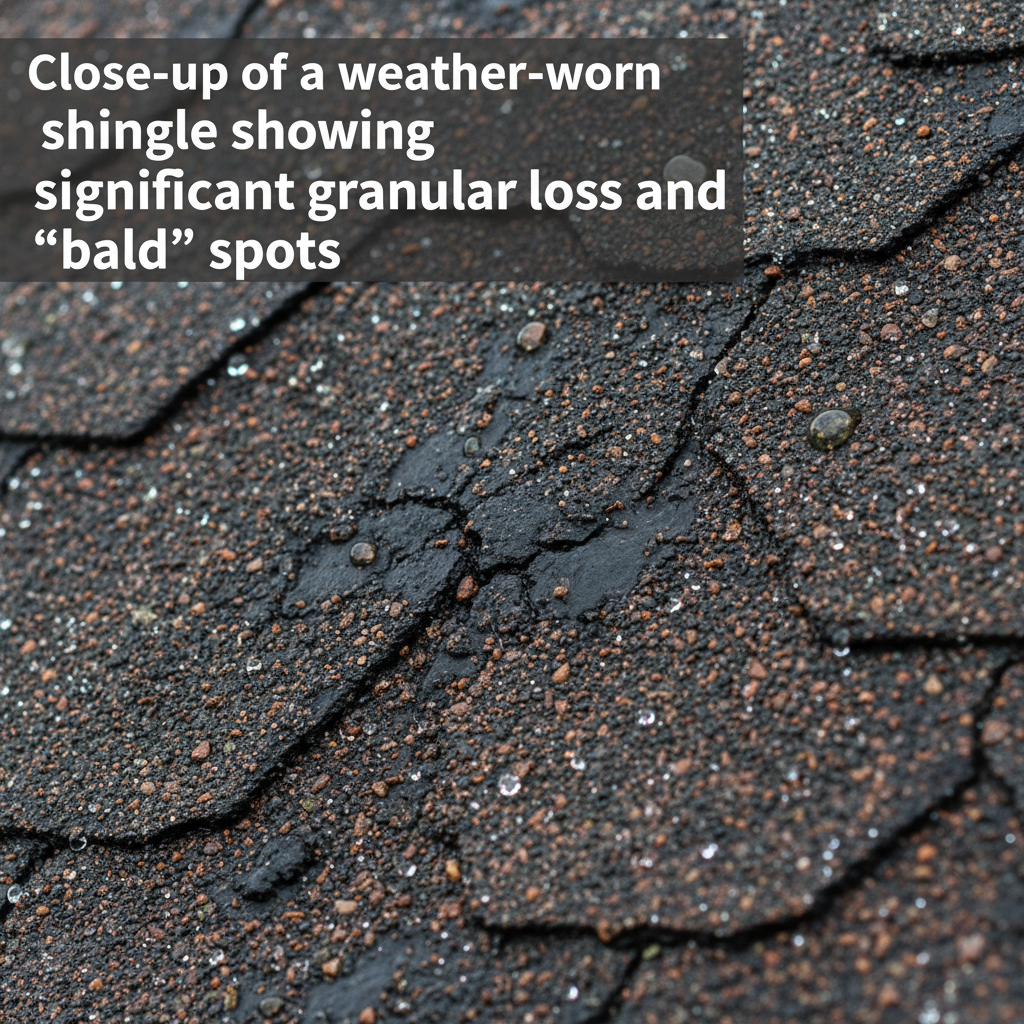
Shingle heat damage occurs because asphalt shingles are petroleum-based products that rely on volatile oils to remain flexible and waterproof. The intense Houston sun essentially "bakes" these oils out of the shingles, a process known as volatilization. As the oils evaporate, the shingles lose their ability to shed water and become prone to granular loss.
Understanding Granular Loss and UV Exposure
The ceramic granules on the surface of your shingles are not just for color; they are a protective shield against UV rays. When heat causes the asphalt to harden, these granules lose their grip and wash away into your gutters. Without this protective layer, the underlying asphalt is exposed directly to the sun, accelerating the "Houston Heat Tax" and making the roof more susceptible to leaks.
The Impact of Radiant Heat on Underlayment
It isn't just the shingles that suffer; the heat also affects the underlayment and the roof deck. Standard organic felt paper can become brittle and turn to dust under extreme heat. As a leading houston roofing company, we frequently recommend synthetic underlayments, which offer much higher heat resistance and won't rot or degrade as quickly as traditional materials when exposed to the high temperatures typical of a Texas summer.
"In practice, we find that a roof with poor attic ventilation can be 20-30 degrees hotter than a well-vented one, effectively doubling the speed of shingle aging during the peak of July and August." — Raydiant Roofing Expert Team
How Does a Roof Lifespan in Texas Compare to National Averages?
A roof in Houston will almost never reach the 30-year "lifetime" mark advertised on many shingle bundles. While a roof in a mild climate like Ohio or Oregon might last 25-28 years, a roofer houston homeowners trust will tell you that 18 years is a more realistic expectation for a local asphalt roof.
📈 Average Asphalt Roof Lifespan: Houston vs. National Avg.
Why 30-Year Shingles Fail Sooner
The "30-year" rating is a manufacturer's laboratory estimate based on ideal conditions. These tests do not account for 100 consecutive days of 95°F+ weather. When you work with an experienced roofing company, they should explain that the warranty often covers manufacturing defects, but it doesn't stop the sun from naturally wearing out the product.
The Financial Cost of the Heat Tax
Because roofs in the Gulf Coast need replacement more frequently, the "tax" is literal. Homeowners may find themselves replacing their roof 1.5 times for every 1 time a homeowner in a cooler climate does. This emphasizes the need for high-quality installation and robust materials that are specifically engineered for high-heat environments.
ℹ️ Info
Pro Tip: To combat the Houston Heat Tax, consider "Cool Roof" technology. Shingles with reflective granules can reflect a higher percentage of the sun’s rays, keeping your attic cooler and potentially extending the life of your roofing system by 3-5 years.
What Can a Houston Roofing Company Do to Protect Your Home?
Protecting your home from the Gulf Coast climate requires more than just nailing down shingles; it requires a systematic approach to "roofing for the heat." A professional houston roofer focuses on ventilation, material selection, and regular maintenance to mitigate the effects of the Houston Heat Tax.
The Importance of Advanced Ventilation Systems
Proper airflow is the most effective way to lower attic temperatures and protect your shingles from the inside out. By using a combination of soffit vents for intake and ridge vents or solar-powered attic fans for exhaust, we can significantly reduce the thermal load on the roof deck. According to the Asphalt Roofing Manufacturers Association (ARMA), proper ventilation is critical for both shingle longevity and energy efficiency.
Choosing Climate-Specific Materials
When selecting a houston roofing company, ensure they use materials designed for the South. This includes:
Algae-resistant shingles: To fight the dark streaks caused by Houston humidity roofing issues.
High-temp underlayment: To prevent the "baking" of the roof deck.
- Class 4 Impact Resistance: While primarily for hail, these shingles are often built with modified bitumen (rubberized asphalt) that handles thermal expansion much better than standard shingles.
Conclusion: Mitigating the Effects of the Houston Climate
While nobody can change the weather in Southeast Texas, you can take proactive steps to ensure you aren't overpaying the "Houston Heat Tax." By investing in proper ventilation, choosing heat-resistant materials, and scheduling regular inspections with a local houston roofer, you can extend your roof lifespan in Texas and protect your home for years to come.
If your roof is over 15 years old, it’s time for a professional evaluation to see how the heat has treated your shingles. Contact Raydiant Roofing today for a comprehensive inspection and let us help you build a roof that stands up to the Texas sun.